What Makes the Right Metal Roofing Panel for Your Project?
Selecting a metal roof panel isn’t a single decision — it’s a series of them. Slope, span, seam type, substrate, approval requirements, and long-term serviceability all factor in before the first panel leaves the plant.
McElroy Metal manufactures one of the industry’s broadest product lines specifically so contractors and specifiers can match the right system to the project, not the other way around.
From high-performance mechanically seamed panels to symmetrical T-seam systems and cost-effective exposed-fastener options, the portfolio covers virtually every commercial and contractor application.
Each system ships from one of McElroy’s 14 manufacturing facilities, with a service center network that supports consistent supply and on-the-ground technical help.
Use the sections below to identify which system category best fits your project, then proceed to the product pages, where you’ll find full specifications, test reports, installation manuals, and warranty documentation.
How Do I Choose Between Standing Seam and Exposed Fastener Systems?
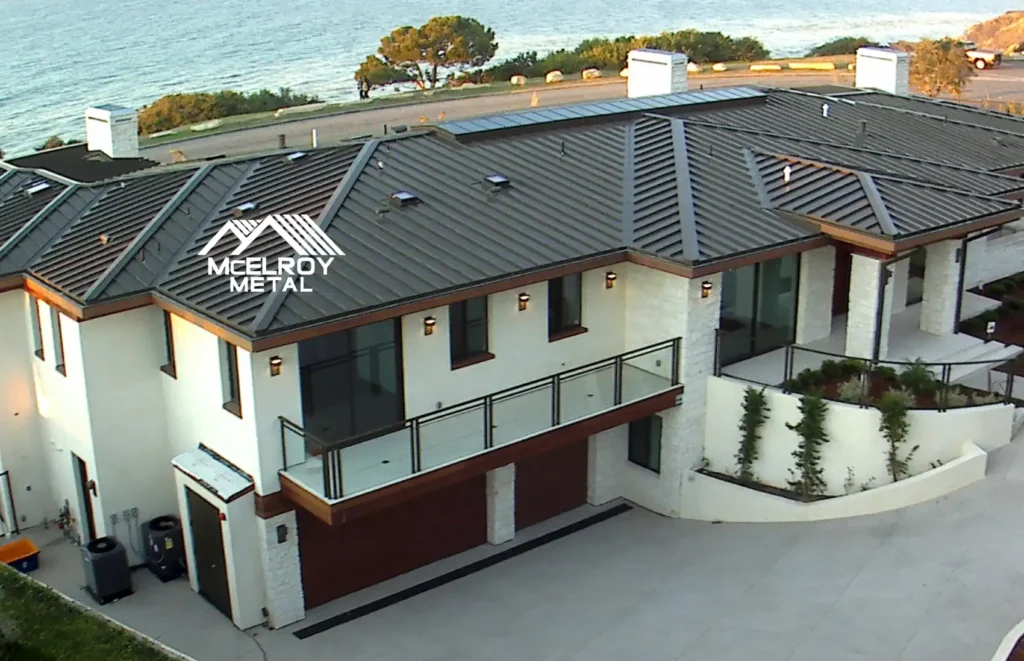
The most fundamental decision on any metal roof project is the attachment method. Standing seam systems — whether snap-together or mechanically seamed — use concealed clips or fastening flanges that allow the panel to float and move thermally. Fasteners that attach the metal to the substructure don’t penetrate the face of the metal. That matters on commercial jobs where long-term weathertightness, wind uplift ratings, and low-slope performance are specifiable requirements.
Exposed fastener systems attach to the substructure through the panel face using color-matched screws. They cover more area per panel, install faster, and cost less per square — which is why they’re the workhorse of post-frame, agricultural, commercial, and industrial construction. Serviceability and replacement are straightforward. The tradeoff is that through-fastened panels create penetrations that require maintenance on long-term applications.
Neither is inherently better. The right answer depends on slope, panel length, budget, building geometry, approval requirements, and how the building will be used over its service life.
Maxima Ideal Applications
- Architectural, commercial, and industrial roofing where long panel runs and watertight seams are required.
- Low- to steep-slope roofs needing structural capacity and tested performance.
- Projects requiring high wind uplift resistance and factory-notched precision for faster installation.
- Retrofit or new construction projects demanding long-term aesthetics and proven performance.
Maxima Top 3 Benefits
Proven Structural Strength: Mechanically seamed design with rib heights from 1 ½” to 3″ delivers excellent wind uplift resistance and structural integrity for demanding environments.
Long-Term Weather Protection: Concealed fasteners, continuous seams and in-seam sealant ensure watertight performance, while the Kynar 500® (PVDF) finish provides industry-leading fade and chalk resistance.
Design Flexibility: Available in four profiles—Maxima 1.5, Maxima 2, Maxima ADV, and Maxima 324—to meet both architectural and structural design requirements.